
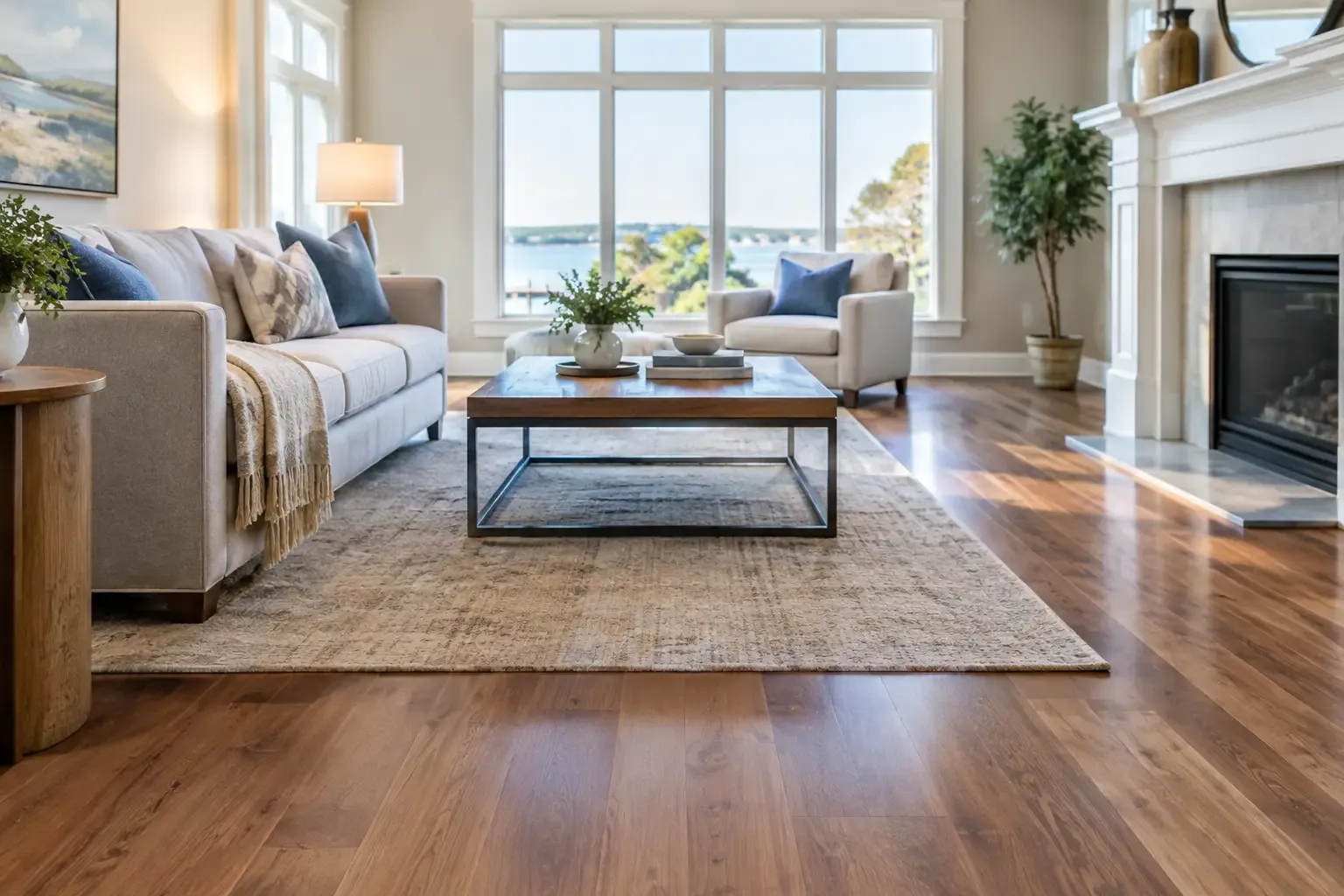
A floor color can make a Bethesda colonial feel freshly updated without removing its character, or make a newer Rockville home feel warmer and more settled. It can also make every scratch, dust trail, and pet hair more visible than expected. The right floor colors are not chosen from a small stain chip alone. They should be selected in the actual room, on the actual wood, with the home’s light, furnishings, traffic, and long-term maintenance in mind.
For hardwood flooring, color is only one part of the decision. Wood species, grain pattern, sanding quality, stain application, and the final protective finish all influence what you see after the project is complete. A dependable result begins with a clear evaluation of the existing floor or the new material before anyone commits to a shade.
Start With the Wood, Not Just the Stain
The same stain color can look dramatically different on red oak, white oak, maple, hickory, walnut, and pine. Red oak has warmer undertones and a more open grain, so it often pulls stains warmer or more varied. White oak tends to accept gray, neutral, and medium-brown colors with a calmer, more contemporary appearance. Maple can be beautiful but may absorb pigment unevenly without the correct preparation.
This matters especially when refinishing an existing floor. A homeowner may bring in a photo of a pale natural white oak floor, but the home may have 80-year-old red oak underneath. That does not mean the desired direction is impossible. It means the color needs to be developed realistically, often through custom mixing, water-popping, conditioning, or a different finish system.
A professional floor evaluation should also identify previous stain, old wax or contaminants, board replacements, repairs, and areas affected by sun fading. These details determine whether the floor can take color consistently. On historic homes, preserving a natural range of tone may be more appropriate than forcing an overly uniform result that hides the floor’s age and character.
Floor Colors Should Follow the Room’s Light
Natural light has more influence on hardwood than most people expect. A stain sample that looks soft gray in a showroom can appear blue, green, or flat in a north-facing room. A rich brown may look elegant in a shaded dining room but nearly black in a bright, sun-filled family room during the afternoon.
Before selecting a final color, test larger samples directly on the floor after sanding. View them in daylight, at night with the room lights on, and beside cabinets, trim, area rugs, and upholstery. This is where a custom stain process earns its value. A small adjustment in brown, amber, gray, or black pigment can move a color from cold to balanced.
Light-colored floors usually help smaller rooms feel more open and make dark furnishings stand out. They are often a strong choice for homes with limited daylight or a clean, contemporary design. However, very pale floors may show dark debris, scuffs, and some traffic marks more easily, especially near exterior doors.
Dark floor colors bring contrast and formality. They can anchor larger rooms and complement traditional millwork, deep paint colors, and classic furniture. The trade-off is maintenance visibility. Dark brown, ebony, and near-black floors tend to reveal dust, pet hair, water spots, and surface scratches sooner than medium tones. They can be the right choice, but they should be chosen with clear expectations about routine cleaning.
Why Medium Browns Remain a Smart Long-Term Choice
Medium brown hardwood is not a compromise color. It is often the most practical option for an active Maryland home because it balances warmth, design flexibility, and day-to-day forgiveness. A medium brown can work with traditional cherry furniture, painted kitchen cabinets, brass hardware, black window frames, and future decorating changes.
These colors also tend to handle the visual effects of normal living better than very light or very dark floors. Fine scratches and dust are less obvious, and the floor still has enough depth to show wood grain. For homeowners planning to stay in place for years, that flexibility matters more than following a short-lived color trend.
Warm medium browns work especially well with red oak, while neutral brown and taupe-brown blends are common choices for white oak. If a client wants a grayer look, a brown-gray combination generally ages better visually than a flat, heavily gray stain. Pure gray trends can date quickly and may clash with warm cabinets, brick fireplaces, or existing trim.
Consider the Whole Floor System
Color does not live on its own. The sheen of the final finish changes the way the color reads and how wear is seen. A high-gloss finish reflects more light and can make a floor look formal, but it also highlights scratches, footprints, and unevenness. Satin and matte finishes are usually more forgiving while still providing a refined appearance.
For a natural appearance, some homeowners prefer a low-sheen finish that lets grain and texture take the lead. Others want the deeper, richer appearance created by a stain and a traditional finish system. There is no single best choice. A family with large dogs and children may prioritize a lower-sheen, durable finish, while a formal commercial lobby may require a different look and maintenance plan.
The condition of the subfloor and the quality of preparation matter just as much. Proper repairs, board replacement, leveling where needed, detailed edge work, and careful sanding create the surface that allows a color to look even. Stain cannot correct poor sanding, uneven repairs, or water-damaged boards. In fact, darker colors often make these issues more noticeable.
Popular Floor Colors and Their Real-World Trade-Offs
Natural and clear-coated wood remains a strong choice because it shows the species honestly and avoids the risk of a stain looking different than expected. It is especially effective on white oak, walnut, and character-grade flooring with appealing grain variation. On red oak, a natural finish will keep the wood’s inherent warm or pinkish undertones visible, which may be exactly right for a traditional home.
Blonde and light neutral tones give rooms an open, current feel. They pair well with white walls, natural textiles, and simple cabinetry. They require thoughtful sample work because a color that is too washed out can make warm red oak look pink or orange by comparison.
Medium brown shades are versatile, easier to live with, and often appropriate for resale. They bring out grain without turning the floor into the darkest surface in the room. Rich espresso and dark walnut colors create a strong visual statement, but they demand excellent sanding and a realistic commitment to regular care.
Custom colors are often the best answer when standard options feel too warm, too gray, too dark, or too uniform. Refinish My Floors develops custom stain samples on-site so clients can compare options in the space where the floor will actually live. That process is far more reliable than choosing from a printed chart.
Match the Color to How the Space Is Used
An entryway, kitchen, hallway, and family room should be evaluated differently from a formal dining room or low-traffic bedroom. High-traffic spaces benefit from colors and finishes that minimize the appearance of routine wear. If water, salt, or mud is regularly tracked inside, the protective finish and cleaning routine deserve as much attention as the stain.
Commercial spaces add another layer of planning. Retail floors, offices, and common areas need a color that supports the brand or interior design while remaining practical under heavier foot traffic and maintenance schedules. A dramatic dark floor may look impressive at opening, but a medium tone can be easier to maintain consistently over time.
If you are blending an addition with existing hardwood, matching color requires more than finding a similar stain name. Age, wood species, grain, and light exposure all affect the result. A skilled refinishing team can feather, blend, or refinish connected areas to create a more intentional transition, but an exact match is not always possible when materials differ.
A Better Way to Make the Final Choice
Narrow the direction first: natural, light neutral, medium brown, warm traditional, or dark and dramatic. Then test two or three realistic options on the sanded floor. Comparing too many samples usually makes the decision harder, while a focused group makes differences in undertone and sheen easier to see.
Look at each sample next to permanent features that will remain after the work is complete. Cabinetry, stone countertops, brick, trim, railings, and large furniture matter more than a temporary paint color. Ask how the floor will look after ordinary use, not only on the day the final coat dries.
A well-chosen hardwood color should support the home rather than compete with it. Request an on-site assessment, review samples in your own light, and choose a finish plan that fits the way you live. That is how a floor remains satisfying long after the stain trend has changed.