
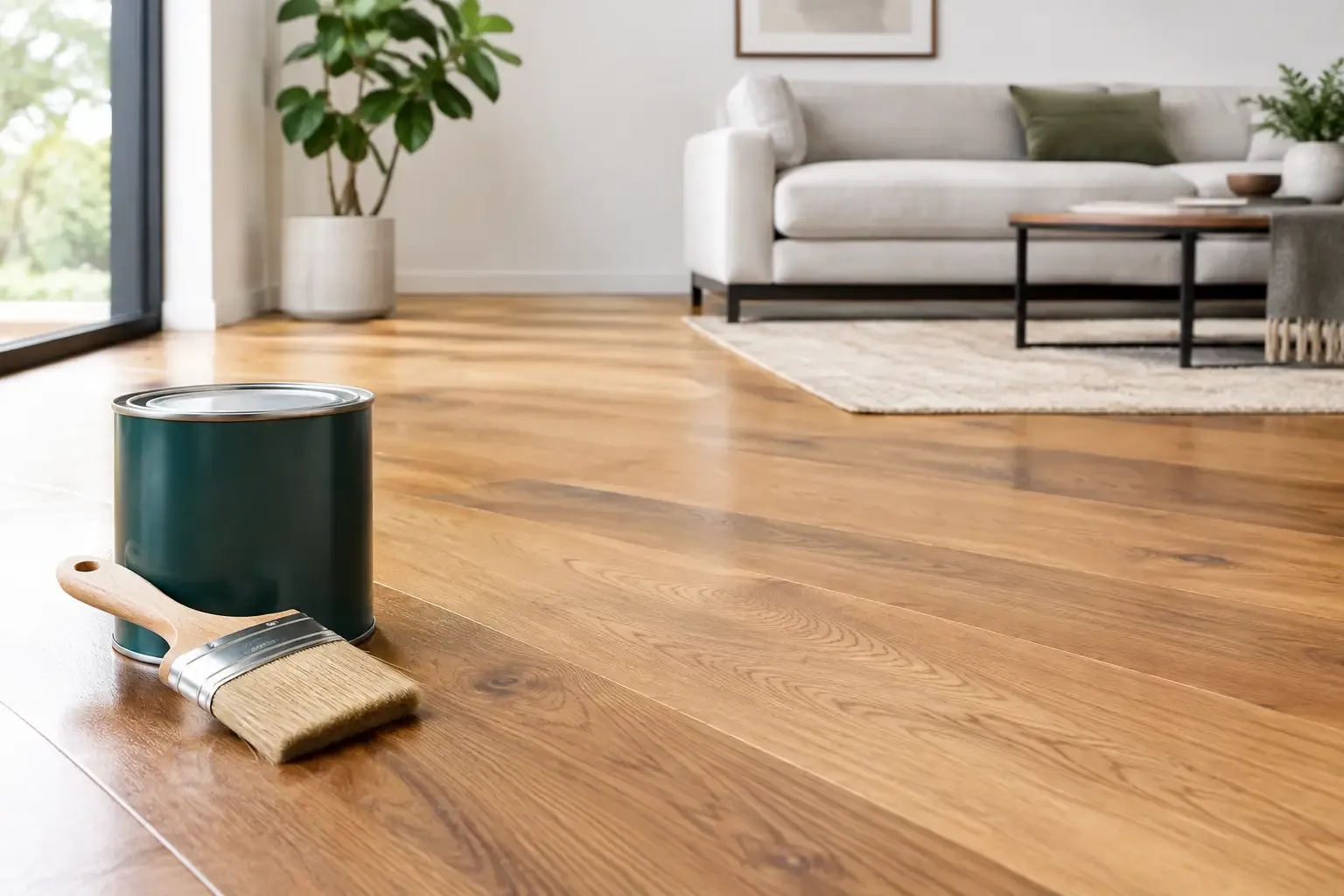
A floor can be beautifully sanded and still disappoint if the finish does not fit the household. Rubio Monocoat hardwood floors appeal to homeowners who want a natural wood appearance, custom color, and a finish that does not leave the surface looking heavily coated. The result can be striking, especially in historic homes and design-focused renovations, but it depends on careful sanding, disciplined application, and realistic expectations about maintenance.
Rubio Monocoat is not a shortcut finish. It is a hardwax oil system with a distinct process, and the preparation underneath it shows in every board when the job is complete. For homeowners in Bethesda, Potomac, Rockville, and the greater Baltimore area, where original oak floors and newer wide-plank installations are both common, that level of detail matters.
What Makes Rubio Monocoat Hardwood Floors Different?
Traditional polyurethane finishes build a protective film over the wood. Rubio Monocoat Oil Plus 2C works differently: the oil bonds with the wood fibers while leaving a low-sheen, natural-looking surface. Rather than seeing a thick layer of finish on top of the floor, you see more of the wood itself – its grain, texture, movement, and character.
That look is the primary reason many clients consider it. White oak can retain a clean, contemporary appearance instead of taking on an amber cast. Red oak can be softened with the right color selection. Rift- and quarter-sawn boards, reclaimed wood, and carefully restored older flooring often gain depth because the finish does not obscure their natural variation.
The system also offers substantial color flexibility. A custom sample process can help determine whether a warm neutral, a deeper brown, a whitewashed tone, or a more modern muted color works with the existing cabinetry, trim, lighting, and furnishings. A color that looks ideal on a small sample can shift significantly across an entire room, particularly on mixed-grain oak or a floor with older repairs. Testing on the actual wood is not optional when color consistency matters.
The Surface Preparation Determines the Result
With a low-sheen oil finish, there is nowhere for poor preparation to hide. Swirl marks, uneven sanding, remaining stain residue, filler mismatch, and cross-grain scratches can all become visible once color and oil are applied. This is why a professional evaluation should begin with the floor itself, not a color chart.
A proper refinishing process includes inspecting for movement, cupping, pet stains, gaps, damaged boards, and prior coatings. If repairs are needed, they should be completed before final sanding. The floor then needs a consistent sanding sequence, careful edge work, detail sanding around corners and trim, and thorough cleaning before the oil is applied.
Species and condition affect the approach. Open-grained red oak absorbs color differently than white oak. Maple can be more challenging to color evenly. Older Maryland homes may have boards with sun fading, water marks, previous patching, or areas that were refinished at different times. Those variations can add character, but they can also limit how uniform a final color will be.
For this reason, the best question is not simply, “Can my floor be finished with Rubio?” A better question is, “What will this particular floor look like with Rubio after repairs, sanding, and color testing?” An on-site assessment provides a much more reliable answer.
Application Requires Control, Not Excess Product
Rubio Monocoat is designed to be applied in a very thin, controlled layer. Applying more product than the wood can accept does not improve protection. It can leave excess material on the surface, create uneven sheen, or extend curing conditions unnecessarily.
The application must be worked into the wood evenly and buffed correctly. Edges, transitions, stair treads, and areas around radiators or built-ins require particular attention because they often absorb and reflect light differently than the open field of the floor. A professional crew plans the sequence so wet edges, coverage, and buffing remain consistent from room to room.
Ventilation, temperature, humidity, and cure time also matter. A floor may look finished on application day, but it still needs time before it can handle rugs, furniture, pets, and normal household traffic. Following the finish manufacturer’s cure recommendations protects the investment during the period when the floor is most vulnerable.
The Advantages Homeowners Notice
The visual benefit is clear: Rubio Monocoat can make hardwood look like wood rather than a plastic-coated surface. Its matte to low-sheen appearance works well with both traditional millwork and contemporary interiors, and it tends to make scratches and everyday dust less obvious than a high-gloss floor.
Spot repair is another meaningful advantage. With a film-building finish, a deep scratch or worn area may require blending a larger section because the topcoat needs to remain continuous. Hardwax oil systems can often allow localized maintenance or repair when performed correctly. That is especially useful in homes with active children, large dogs, dining-room chair wear, or a frequently used entryway.
The finish is also a good option for clients seeking a more personalized floor color. Because the oil and color system can be selected and sampled for the actual wood species, it supports more design control than choosing a prefinished plank off a showroom rack.
For commercial spaces, the same low-sheen appearance can offer an upscale, welcoming feel. The decision should account for the type of traffic, cleaning program, and willingness to complete periodic maintenance. A restaurant entrance, retail checkout area, or heavily used office corridor may need a different finish strategy than a private living room.
The Trade-Offs to Consider Before Choosing Rubio
A natural-looking finish does not mean a maintenance-free finish. Rubio Monocoat hardwood floors still need regular dry cleaning and prompt attention to spills. Grit is one of the biggest threats to any wood floor, so entry mats, routine vacuuming with a hardwood-safe attachment, and furniture pads remain essential.
The floor should be cleaned with products intended for the specific finish system. Generic cleaners, steam mops, excessive water, oil soaps, and harsh degreasers can affect appearance or leave residues that complicate future maintenance. A professional should provide clear care instructions at project completion, including guidance for the first weeks of cure.
Color variation is another consideration. The same Rubio color may look different across boards with varying grain density, old and new wood, or sections exposed to different amounts of sunlight. This is not necessarily a flaw. In fact, many homeowners choose hardwax oil because they appreciate that authentic variation. But if the goal is a highly uniform, opaque color across a heavily patched floor, another system may be more predictable.
Cost can also vary. The finish itself is only one part of the project. Extensive repair work, stain testing, detailed sanding, stairs, handrails, and the condition of an existing floor can all influence the scope. An honest estimate should explain what preparation is included and identify any conditions that may require added work once sanding begins.
Where This Finish Works Best
Rubio Monocoat is often an excellent fit for living rooms, bedrooms, dining rooms, offices, and whole-home renovations where the owner values a tactile, low-luster wood surface. It can be particularly compelling in older homes where the goal is to preserve the character of original flooring without making it look overly glossy or new.
It can also work well on new unfinished hardwood, where board selection, installation quality, and sanding can be controlled from the beginning. Wide-plank white oak is a popular pairing, but the finish can also complement traditional strip oak, walnut, ash, and other species when the color and preparation are matched to the wood.
Bathrooms, below-grade spaces, or areas with chronic moisture concerns need a separate conversation. No finish makes hardwood immune to water intrusion, pet accidents, or prolonged humidity changes. If a floor has cupping, black water staining, or suspected moisture below the boards, correcting the source comes before selecting a finish.
A Better Way to Choose the Finish and Color
The strongest flooring decisions start with samples made on the actual floor or on boards from the same material. Review them at different times of day, with window light and interior lighting. Place samples next to cabinetry, wall paint, rugs, and adjoining flooring. What looks gray under showroom lighting may look warm, green, or brown in a home.
At Refinish My Floors, the evaluation process focuses on the condition of the wood, the level of repair required, the desired color, and how the space is used. Digital tools can help clients review floor options, document damage, and follow project progress, but craftsmanship still happens at the floor level: proper sanding, careful repair, clean containment, and precise finish application.
Before choosing Rubio Monocoat, ask for a clear explanation of the sanding plan, color samples, cure expectations, and ongoing care. The right finish is the one that matches both the look you want and the way your household actually lives on the floor.